Tuesday, July 16, 2019

You never know what you will find once you start to pull a room apart.

Well, tonight's blog post is a bit of a spur of the moment write up, written with excitement to share our recent find. We have been very busy with the garden, trees, tractor, and general house upkeep. Today it was raining for most of the evening so we decided to head upstairs to the bedroom we have been remodeling.

We haven't had a chance to really write a post about the room remodel, so I will give it a quick explanation and if you stick with me you'll get to see the really cool things we found in the room.

To start this off: the room started off as "we are just going to paint it before we move our bedroom up there." Famous last words.

Room mid-carpet removal

Then it turned into... the carpet is older so maybe we will just replace that...  So we removed it and found the original wood flooring with the original paint (plus some extra since the previous owner painted his trim right on the ORIGINAL FLOOR.)

Original floor with hole for air pass through

Well, then we got poking around in another room and realized that the previous owners had drywalled over the plaster so we decided to poke around up in what will be our bedroom and we struck gold! We not only found the original plaster... but the original baseboards too. He just drywalled right over them. Thank goodness he didn't just get rid of them.

Baseboard recon mission

So, as you may guess by this point in time, we are now removing the baseboards and restoring them, removing all drywall (including the closets), and restoring the floor back to it's original 19th century color. Wow, did that escalate.

We started the process by removing the drywall. What a mess, but we found the plaster walls to be fairly stable under their wallpaper.

Drywall removal in progress


Funny thing you don't realize until you remove the drywall... now all the window frames and door frame pieces don't fit anymore, so we will need to redo those. But not to worry, because we have the original door, so we shall be putting that back and reframing the door anyways. Some of the old doors were found in one of the barns.

Door in barn


Well now that the drywall is removed and hauled off, we paused for a long time to try to get all of the outside tasks accomplished. But in the mean time, we hired an electrician to pull out half of the 10 outlets that were in the tiny room and remove all modern lights. Why no we aren't crazy, lamps are a great invention.

Today, we did a quick step to try to move the room forward since it was raining. We removed the wallpaper. There were two layers of wallpaper on the plaster. Really, we did this to try to ascertain the extent of the damage to the plaster from the previous owner putting a thousand screws into it to hang the furring strips that the drywall was hung on. We certainly did not expect to find what we found.

Pink wallpaper


First, off came the pink wallpaper put on by the owners we purchased the home from.


Blue wallpaper


Then we had to take down the blue wallpaper, hung by 2 owners before us. I don't know what he used to hang that wallpaper, but I think it could have glued just about anything together, the wallpaper was still so well stuck to the wall. We worked carefully to try not to pull off as much plaster as possible, since it is far easier to stabilize than repair. As we went we made some pretty amazing discoveries...


Wallpaper be gone


First, I found this guy and his friend:


Sketches on the wall. A man and a duck.


Someone wasn't convinced when I told him I thought it was a mid 19th century drawing.

Then we found this guy:

Sketch of person

and finally we found this guy and his pipe

Sketch of guy with pipe

So, after all of our discoveries, we both are fairly certain, based on other mid 19th century graffiti we have seen and drawings on other paper goods, including ones we own, that these drawing date to when the first owner built the house.

You never know what you are going to find!

Friday, April 19, 2019

Our Recent Purchase, Headache, Adventure, and Toy


Well, I said I would write this blog post 2 days ago and we see how that went… about as well as our delivery of said item.

Mystery Object

If you know us, or have been following the blog, you know we moved out into the country in December and have 12 acres. Our 12 acres now has a small orchard planted on it and we are planning our next project, a big garden. We lease 7-8 acres of the land to a farmer currently (honoring a lease that was signed with the previous owner). The garden still should be rather large with some room to expand. Some of the area is part of the field that the farmer gave us back, but a large portion of it is grass.


The person who farms our field has nicely offered to disc the garden for us, but it will need to be broken down further before we can plant. So… the moment you have all been waiting for…. What did we buy…….


A TRACTOR! Not just any tractor but a 1947 Farmall Model A and as one person commented of course it is old! We sure love our antiques. We went with a Farmall Model A because it’s small enough to fit in the barn and made to do row crops with a high clearance. We also really like that it looked like the older style of tractors (Pre-WWII) instead of the new style of modern tractors more similar to Ford Model 9N.

Farmall Model A


Farmall was a model/brandname for International Harvester. Most Farmalls were made for row-crops. They were primarily built as affordable, all-purpose tractors for small to medium family farms. It perhaps is one of the most well-known tractor brands in the 1940’s. The model is also a 1 plow tractor. The engine on this model is offset from the seat to be able to see where you are going.


Offset Engine from Seat


Now, we are super excited to have our Farmall tractor. We had been looking at these for a while and we got a good deal on this one. It needs a bit of work though. It needs all four tires and the clutch is stuck, but it runs well. So, after a quick call to my mechanic father to see if he’d help us fix up the tractor, we bought it!

Next step, how to get it home. The guy who owned the tractor also had a tow truck business and offered to drop it off. This is where the fun starts… They came to drop off the tractor and the flatbed truck pulls in the driveway (mistake 1). He then realizes the tractor needs to go into the carport. He tells Jeremy he will have to drive on the grass a little bit to get it turned around. This is where things go haywire.

Sunk Tow-Truck
The truck goes off of the grass more than a little and sinks. Not just sinks a little but buries itself to the axles. …. OOPS. Well, he can’t get out. He then calls another tow truck… which is unable to pull him out…. Then, he calls another larger tow truck and in the process of being successfully removed from the crater he had dug himself rips up even more of the yard and adds to the new pond that’s been dug for us.

It's moving!

Bye-bye truck!

Our temporary new swimming hole


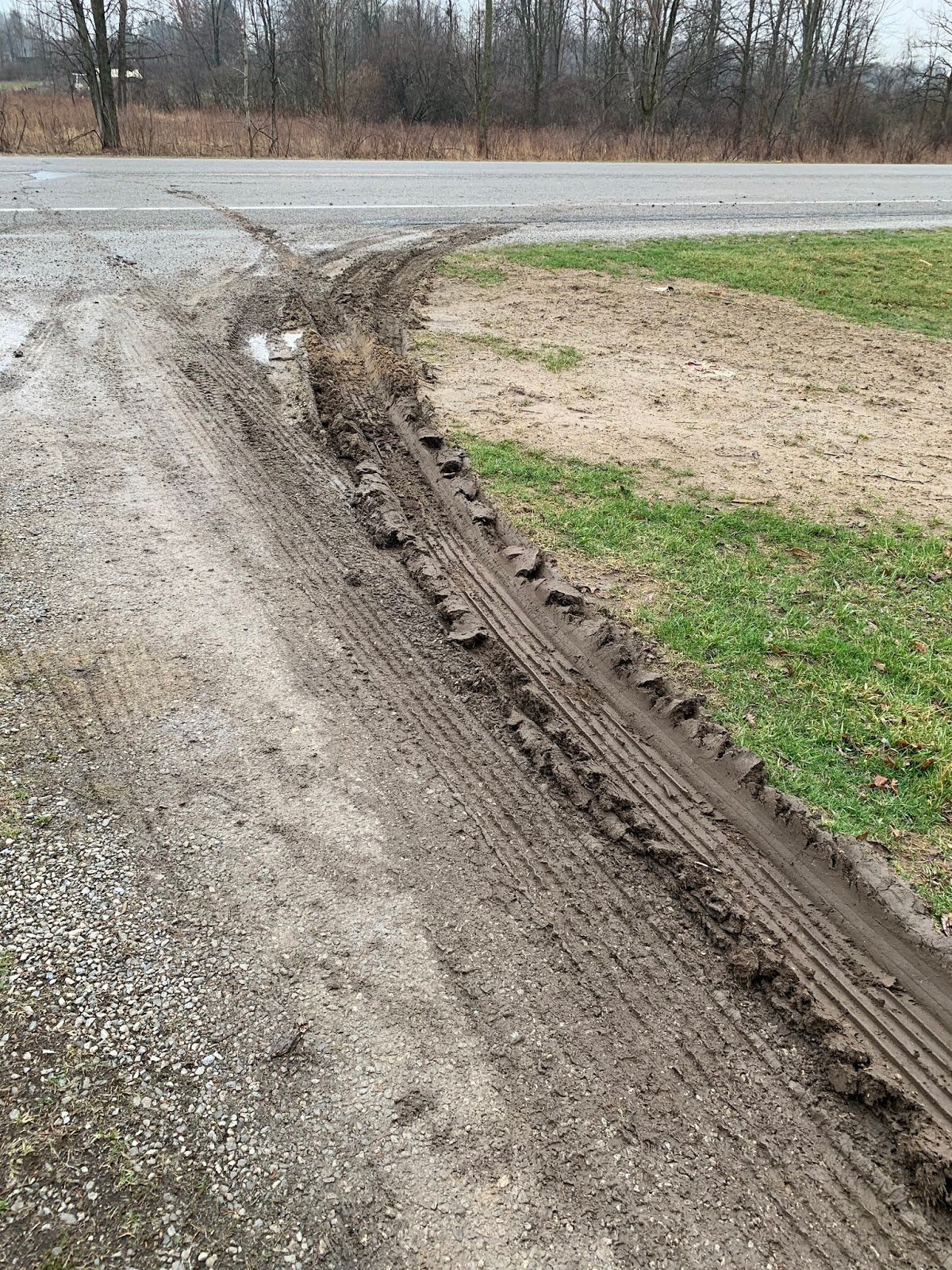
Finally, after being extracted he gets in his truck backs out of the driveway and cuts the wheel really hard and digs one final rut before leaving… wow what a crazy 4 hours. At least the owner of the tractor/tow truck company has said once things dry out he will fix the yard up just like it never happened. So now we hope it stops raining so it can dry out.

One last rut for good measure.

This blog post was partially delayed because the tractor was unloaded anywhere it could be gotten off of the truck safely to lighten its load. So, it was stuck half rolled over a stump and Jeremy and I could not roll it over it. So, special shout out to our good friend who drove over the next day to help us push it under the carport out of the rain that seems to never end this spring.


The bright side to it all is that our 1947 Farmall tractor is home and awaiting its new life on our farm.


Home Sweet Home

Wednesday, April 3, 2019

Planting the Apple Trees

With the apple trees ordered, it was time to do some research into how to plant the trees, along with doing some preparation before they arrived. One challenge was how much information is out there for planting apple trees. This is because the many different sources contradict each other. For example, some would say make a hole 2x the size of the root ball while other say just a little larger than the root ball. Another source would say, prune the roots or the branches while another would say never do that. In the end, we did our best to follow any direction that was provided by the nursery we ordered the trees from, since they provided a survival guarantee.

Before they arrived, we picked out ground for where we wanted them. The area seemed to stay well drained (much of our yard space is not), could be seen from several windows, was near the pond to help with watering, and was on the side of the house. Setting up a small orchard in the side yard seems to be very common historically, at least around here. Next was a soil test. Everything tested well for the apple trees except for the nitrogen test. That test seems to be a dud, as it showed no color change, nothing, at all. That just isn’t possible since there is very green grass and other things growing in the area. After reading reviews where others experienced similar “results,” we decided we were not too worried about this.

We then started some prep of the area, which included getting fence posts and fencing to keep deer away from the young trees. After some reading, we decided on four T posts around the tree with a five-foot wire welded fence set at a diameter of six feet. This should provide plenty of room for the tree to grow, keep deer from eating the tender branches, and for us to get in there to work if needed. While buying all of this at the store, (along with the fencing needed for the garden later) we had several people comment on how much work we had ahead of us!


We then cut out the sod in a four-foot diameter circle with the center of the trees spaced about 13-14 feet away from each other. The recommended distance was 12-16 feet so we are right in the middle. We then drove the fence posts into the ground. Then back to waiting for the trees.


The trees finally came! Wow, that is a much smaller box then what we pictured! The trees came well packed and were set up to be able to be stored for a few days if needed. We set them aside in a cool and dark place (also known as our basement) until we could get them into the ground.


Looking at the weather and knowing the time it would take we saw a window and went for it! We started late in the afternoon with excitement. Reading and rereading the directions provided we dug our first hole. Taking care to get the roots in a good place and pushing down the soil as we filled in the hole. Making sure the graft area was several inches above the soil and mulch level. Once the tree was in we put a good layer of mulch down around the tree. Then moved to the next one! At first, the archeologist in the family wanted to screen the dirt coming from the holes. So someone else made them a screen to do so. Well, this was really slowing things down and with nothing found in the first hole the search was suspended. The screen will be used another time!


Once all the trees were planted, fertilized, mulched, and watered we turned to the fencing. At this point, the sun was providing its last rays of any warmth with the wind turning to come from the north. While putting up the fencing and bending and twisting each of the clips into place the chill settled in! We were on the home stretch so kept going! We reached the last tree and started to stretch the fencing around when it became obvious we were three feet short! Into the truck we jumped and into town we went! We were both starving so dinner was had and another roll of fencing procured. Racing back home we completed the last fence in the dark with the headlights of the truck. Making it into the house at 11pm.


We woke up the next morning realized it had poured rain a good portion of the night and was still raining! Four of the trees were in good shape but one, which was in the lowest spot, was flooded. We went out into the rain and dug a trench to drain the water away. That evening the rain changed over to snow with dropping temps. The trees sure got a welcome to Michigan!


Thankfully, the young dormant trees are not supposed to be impacted by cold temperatures, snow, or frost.

Now we wait for them to wake up! Once they have leafed out we will water them again and keep watering them. They are supposed to provide fruit in 2-4 years but some have said they did get some apples the first year. We will find out later this year!

After all this, for some reason, we ordered a peach tree, cherry tree, blueberry bush, blackberries, and strawberries. But that will be another story.

Wednesday, March 27, 2019

And someday there’ll be apples there

When we started to look for a house and property one thing we wanted were apple trees. We looked at several that had existing apple trees, but the house was not a good fit. Since we would live in the house, we decided that apple trees shouldn’t be a deciding factor. Where we settled does not have any apple trees, at least anymore. A flyover photo taken in the 1940s you can see where the orchard was. So, we just have to get some planted!

Us picking Northern Spy Apples at an orchard. 

First step was to decide where to get the trees. We knew we wanted heirloom varieties and the sooner we could get them producing the better! We could get one of the varieties we knew we wanted through a county agency. However, they could take 10 years to produce and we would still need to get another variety elsewhere. After lots of Googling we found Trees of Antiquity. We could get our heirloom apple trees and they should start producing in 2-4 years.

Now which apples did we pick!

Northern Spy
From the start, this has been on the list. Why? Well, most importantly we like how they taste. Next, I found a reference that these were very common in Michigan at one time. One source said that if someone says they have an old apple tree on their farm, it is a safe bet it would be a Northern Spy. This is also an all around good apple. Meaning it is good for eating fresh, baking, applesauce, cider, and storage. Last, we wanted it to be a pre-1860s variety. Here is an excerpt from Trees of Antiquity site “An 1847 letter from Oliver Chapin, writes "the first Northern Spy apple trees were raised from seeds brought from the Northwest part of Connecticut, about the year 1800, by Elijah Taylor.

Northern Spy 


Northern Spy does need a partner variety that can cross-pollinate so what to pick? We turned to an expert. We asked for recommendations with the following criteria: existing in Michigan during the 1860s, pollinates with Northern Spy, and is a good cider apple. We know many cider apple varieties saw their demise in the Untied States during prohibition. We like the idea of helping in a small way to bring those back. Looking over the recommendations here is what we will be harvesting.


Snow Fameuse
Also can be known as a Snow or Snow Apple because of its snow white colored flesh. It is a parent of the loved McIntosh. This is another variety that is great for eating and making cider. It is supposed to also make a “fluffy” applesauce! It came from French settlements in Quebec way back in the 1600’s! It then spread over the next 100+ years in every direction for 1,000 miles in Canada and United States.


Snow Fameuse, Snow, or Snow Apple 


Newtown Pippin
Three varieties of apples seemed like a good number to settle on! Newtown Pippin’s story started in 1750 and is said to be the oldest commercially grown and bred variety in the United States. This apple was grown by George Washington and Thomas Jefferson with Jefferson writing “They (being France) have no apples here to compare with our Newtown Pippin.” I was sold right there! For Felicia a selling point was it is said that Queen Victoria was a fan of this apple. She was presented with a basket of the apples in 1838. Afterward, British Parliament lifted import duties on the variety. This apple is known for cider making and develops more sugars while in storage.


Newtown Pippin Apple 


The trees have been ordered and we await their arrival! We will write another post about getting them planted once that is accomplished!

Thursday, March 21, 2019

History of History Acres

Wow! We sure have been slacking on the blog writing front. To be fair, things got pretty busy with mostly boring things like cleaning the house and continuing unpacking the house. We also have had other projects in the works that will probably become future posts.

We thought for this one we would talk about the history of the house. Note, we are still researching the house and hoping to learn more about it, but here is what we know so far.

The county website says the house was built in 1920. However, we noticed that a lot of historic houses in this county are listed as being built in 1920. So, we needed to do more sleuthing into when it was built. To do this, we went to look at some plat maps of the township.

In 1859 the land was owned by Chester Adams and had no buildings on it.


In the 1876 plat map there is a building added to the picture and it is now owned by William Cade.


In the 1916 county atlas the property is now owned by Herman Bottcher.


Well, on the 1859 map there were no buildings shown on the plat map, so we knew that the house was built after 1859. Then we looked at the 1876 plat map and saw that there was a building in the same spot consistently after that. That spot, when lined up with a modern map of the same scale would be exactly where our house is. Ok so narrowed it down. The house was most likely built between 1859 and 1876. Now… who built it and when….

From there we went to the county recorder office and researched the owners of the property listed on the plat map to see who owned the property when. We learned that, the owners were as follows:

1917 - Albert A Betker
1903 - Herman Bottcher
1873 - William R Cade
1863 - Richard E Cade
1857 - Chester Adams (Buying property for railroad easement)
18XX – William Insley

We were able to find transfers of deeds for most of the early property owners. We still haven’t found the deed for the transfer between Richard Cade and William Cade (father and son). Richard Cade and William Cade were the owners for most of the 1859-1876 time frame. We did recently find in a local history book published by the Capac Historical Society that Richard transferred the property to William in 1873. So, we went forward looking for information on them to try to figure out which one built the house.

What we found was really interesting.

Richard Cade came to Michigan in 1856 and rented a farm in Washington Township. Later, he came to Mussey Township and purchased 80 acres of forest land in section 18. Here he built a log cabin and cut a wagon road through the woods to Downey’s Corners (today, this is the road that runs from our house into town!) He then got rid of the farm and moved to Romeo, MI. From there, he moved to Washington state. William R. Cade his son spent much of his younger years helping his father clear and improve their homestead, particularly after he returned from the Civil War. William served in the 4th Michigan, Company H. When he turned 22, his father turned it over to him. He was married in 1872. In the book, written in 1903, it is written that “Mr. Cade has 70 acres of his farm under cultivation, conducts general farming and stock breeding, has an excellent barn and a very handsome dwelling, and a wind-mill for pumping water for his home and stock.” We believe this is about our house. We are currently thinking that the house was built between 1866 (when William R. Cade musters out of the 4th Michigan and returns home to help his father improve their homestead) and his marriage or transfer of ownership to him in 1872 and 1873, respectively. The house is built in a similar style to other houses in the area built in the late 1860’s - mid 1870’s.

Since the house was built, it has been added onto 3 times, at least. The first being the addition of what is now a bathroom and a kitchen (we think this was added in the early 1900’s between 1903 and 1922). Perhaps, this is where the 1920’s date the county had came from. At this time, it appears the house was heavily remodeled, including the laying of a second hardwood floor on top of the original 19th century floors on the first floor of the home. We found a picture at the Capac Historical Museum, taken at the schoolhouse across the road, that has our house in the background from 1922. In this picture, the addition had already been added.


The owners before us heavily remodeled the house, much of which we are undoing to bring back many of the historical features of the home. Many of these projects are/will be featured on this blog. For additions, they added on a sun porch, living room, and craft room.

Though the house has gone through many changes, we know it is a home filled with many great memories. In doing research, we found many newspaper articles that referenced township farm bureau meetings being held here, other social groups meeting, families raised, and even a wedding ceremony! We hope to bring back many of the historical features of the house both from the 19th century and the turn of the 20th century, add to the houses memories, and see what other clues we can find as to when the house was built.

Friday, January 4, 2019

Rusty Barn Gold

I was going to just put these photos up on Facebook. However, someone commented that there is a blog and this could be a post! This is just a simple collection of snapshots I have taken of items found in the two barns or out on the property. There are some other items laying around that I haven't taken photos of.  Perhaps not as interesting, at least to me, or just didn't remember to take the picture. Also, some is probably "modern" or just trash in our minds. We are certain that more will be found as we explore.  Especially, once we get around to really sprucing up the barns.  I added short comments to each of the photos for a description. I certainly do not know everything about the items found.  We welcome comments or any information/knowledge you might have to share!

Large square bolt and nut in with a pile of wood behind a barn.

These were found in the loft of the grain barn. I plan  to clean them up, reshape, and put handles back on them at some point. 

There are a couple of these "repairs" of small holes in the grain barn. 

Box of random items in the large barn. Mostly old electric fence porcelain insulators. 

Hook and eye latch keeping a hatch closed in the grain barn. Perhaps hand forged? 

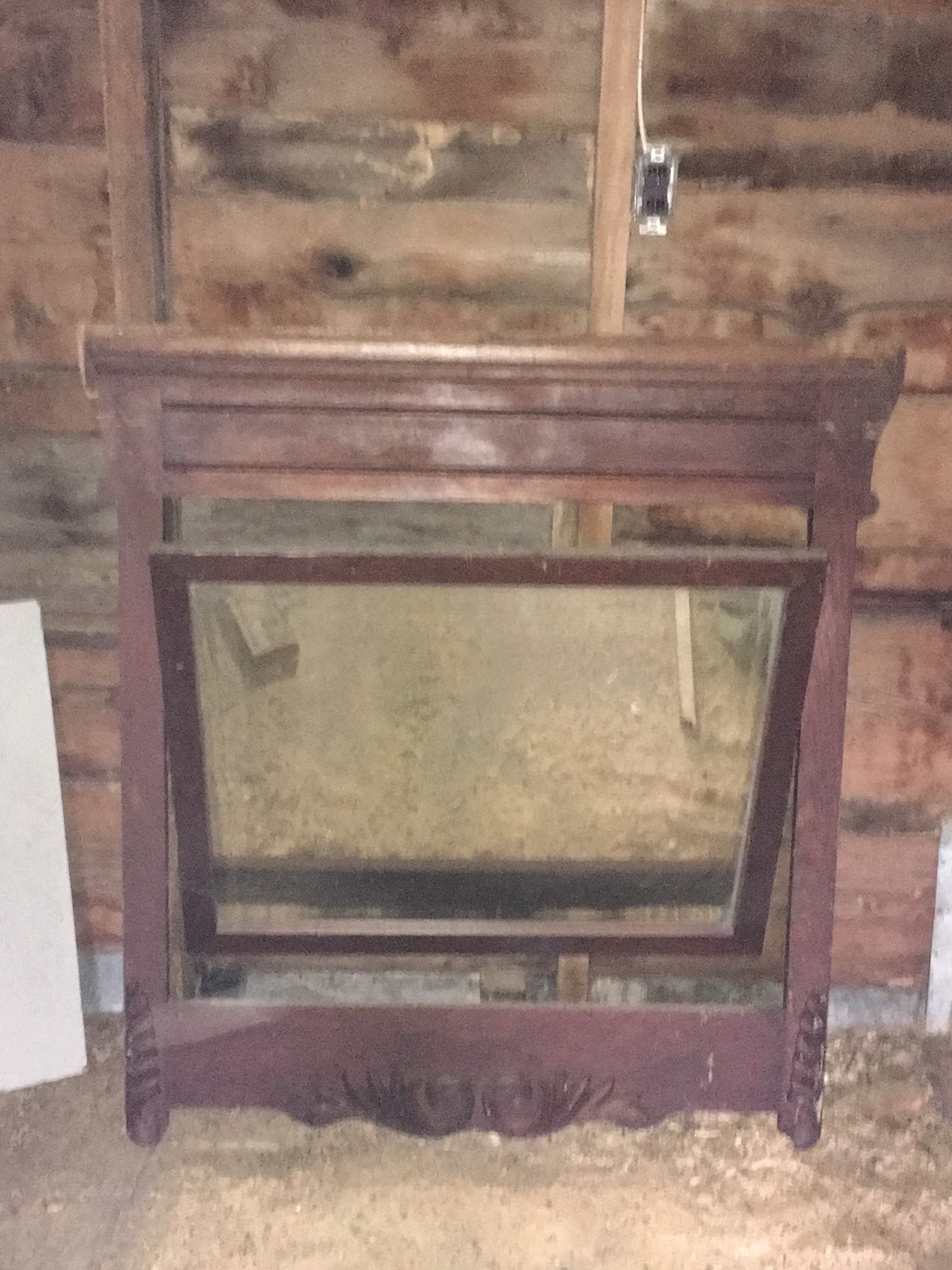
Mirror found in a barn. Assume it did go on top of a dresser. It is upside down still in this photo. 

Several old doors from the house that are stored in one of the barns. 

One of the two lightning rods on the grain barn. 

A couple of door rollers and a set of black porcelain door knobs. The door knobs I came across in piles of debris. 

This was found laying in tall grass behind a barn. I am not completely sure what it once was or was part of. 

Ice tongs and large pulley hanging in the larger barn.

Bin of old tools, mostly square wrenches, found in the grain barn. A planter (corn?) of some sort on the right. 

Large wrench of some type. Not really sure about this one. 

This photo didn't turn out well with the sun shining through the door. A old yoke harness hanging up in the grain barn. 

Carpenter Bee Bee Gone!

This was a quick little project that wasn’t planned! This year we have noticed quite a few carpenter bees around the two barns and at least ...